Banner Brief: Hegseth Announces a Military Pact With Venezuela. The Terms Aren't Public.
U.S. forces and intelligence would work alongside a military whose leaders Washington has accused of drug trafficking and human rights abuses.


Defense Secretary Pete Hegseth said Wednesday in Caracas that the United States and Venezuela have signed a deal to reestablish military ties, ranging from joint training to intelligence sharing [1][2]. He made the announcement on a visit the Pentagon had not announced in advance, ten months after U.S. forces seized then-President Nicolás Maduro [2][3]. The full terms of the agreement have not been made public [4]. That ties U.S. intelligence and training to a military whose leaders Washington has accused of drug trafficking and human rights abuses [4].
What Happened
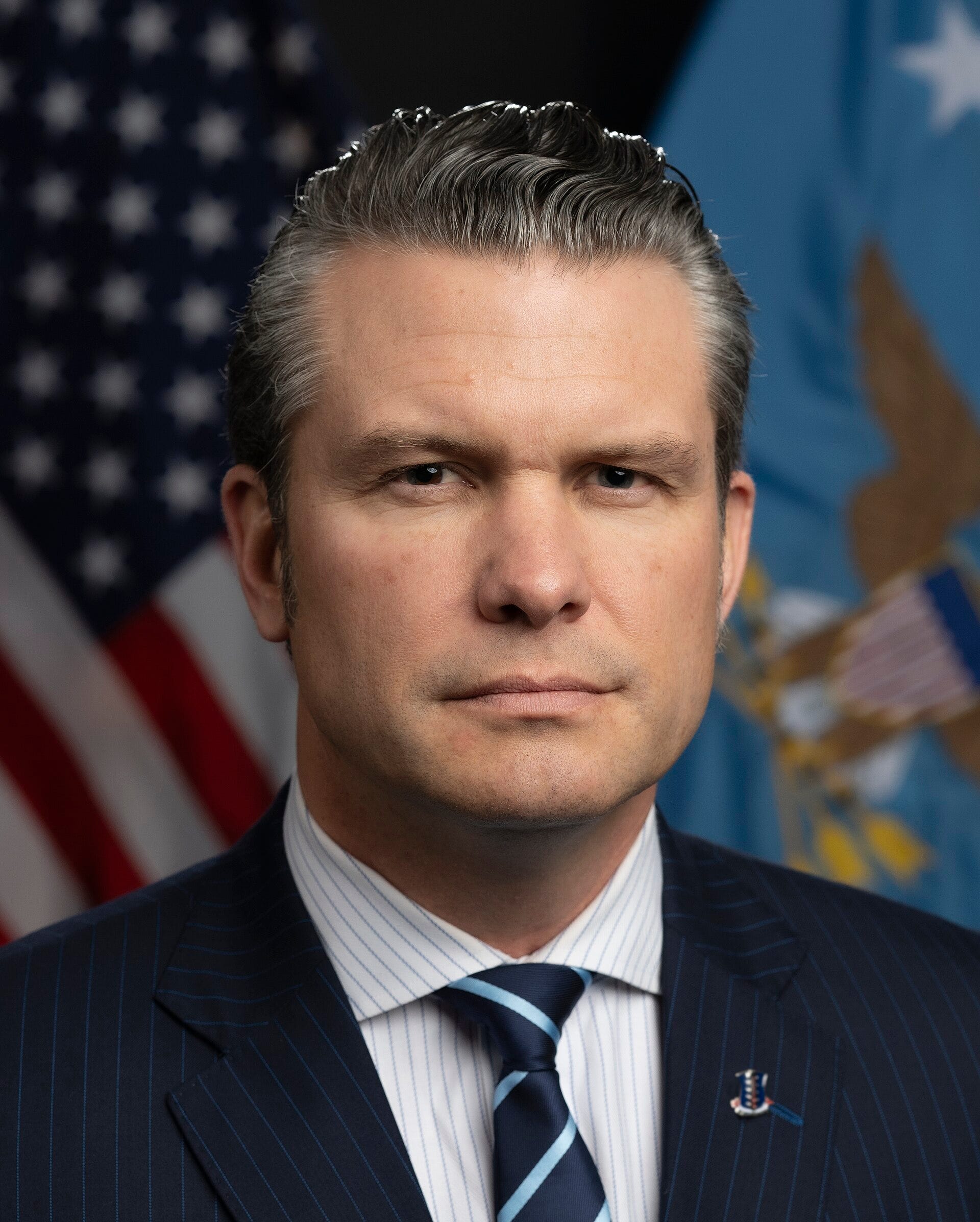
Hegseth met acting President Delcy Rodríguez, Maduro’s former vice president, and Defense Minister Gustavo González López in Caracas [3][4]. He told diplomats and officers from both countries that Venezuela “has gone from our most aggressive regional threat to a compliant security partner” [1]. “We see this as a reestablishment of our defence partnership and the opportunity to work together between our two great militaries,” he said [2].
Hegseth offered few specifics beyond saying the two militaries would be “training together, partnering together, sharing intelligence, more defense equipment and capabilities together,” according to the Associated Press [1]. Al Jazeera reported the agreement also covers border security [4]. The Pentagon did not immediately offer further details, AP reported [1].
He also said U.S. and Venezuelan forces would go after “narco-terrorists” on Venezuelan soil, The Guardian reported, quoting him: “We will hunt you down. We will find you. And we will kill you.” [3] Earlier this month, The Guardian noted, The New York Times reported that Trump officials were trying to negotiate a long-term U.S. troop presence in Venezuela [3].
Rodríguez called the deal a “resumption of the technical-military relationship between both countries” and said she hoped cooperation could be “brought to its highest possible level” [2]. Her court-allowed term expired in July, but she continues to act as head of state, and no date has been set for the next presidential election [1].
Hegseth tied the trip to oil. He said the U.S.-Venezuela energy deal “makes the Strait of Hormuz a non-factor for the Western Hemisphere” [1]. That deal reportedly involves 65 billion barrels of reserves, according to The Guardian [3].
A State Department report released Nov. 12 said more than $12 billion from Venezuela’s oil and other resources passed through U.S.-controlled accounts from January to September, Al Jazeera reported [4]. The U.S. government said nearly 99% of that money had been disbursed, mostly to individuals and businesses in Venezuela through commercial banks [4]. But Caracas still depends on Washington to approve the release of money from those accounts, which could give the administration leverage over Rodríguez’s government [4].
Why It Matters
Hegseth’s pledge to hunt “narco-terrorists” on Venezuelan soil alongside Venezuelan forces [3] would tie U.S. forces and intelligence to that country’s security forces. Washington has accused those forces’ leaders of “drug trafficking, human rights abuses and collaboration with Colombian guerrillas and other armed groups,” as International Crisis Group analyst Phil Gunson noted to Al Jazeera [4]. Gunson also said some senior Venezuelan officers could try to sabotage the process if they feared prosecution or losing their positions [4].
The closest precedent for what Hegseth means by “hunt you down” is the boat-strike campaign. AP counts at least 240 people killed in strikes on boats the administration says carried drugs since September 2025, and says U.S. officials have released little public evidence for those claims [1]. Al Jazeera puts the toll at an estimated 244 and says legal experts have called the strikes extrajudicial killings [2].
None of the coverage we reviewed reports what this agreement will cost [1][2][4]. House Armed Services Committee Chairman Mike Rogers, R-Ala., said Wednesday that any slimmed-down reconciliation bill would have to deal with “the hole in the defense budget that Venezuela and Iran have created” [5]. He was speaking about the defense budget as a whole at a Hudson Institute event, and Breaking Defense’s account of his remarks does not mention the new agreement [5].
Our Read
Almost nothing about this agreement is public yet [4]. A partnership announced at a podium, with terms no one has published, gives Congress no text to vote on, fund or limit. Intelligence sharing deserves the closest watch. If U.S. intelligence feeds Venezuelan operations against armed groups, whoever writes those rules is shaping targeting decisions the public can’t see.
“Compliant security partner” describes a relationship of control, not alliance. Put that phrase beside oil money whose release still depends on Washington’s approval [4], and the leverage is plain. The agreement adds training and intelligence ties on top of it, under terms no one has published. González López says Venezuela’s forces keep their own command [4]; the text will show whether that holds.
The agreement lands weeks before Democrats take both chambers on Jan. 3 [4][5], and after a House vote that sent impeachment articles against Hegseth to committee rather than killing them [6]. Whatever drove the timing, a framework already in motion is harder for a new Congress to unwind.
The Other Side
The administration’s case is security and stability. Hegseth praised Rodríguez for working “closely and pragmatically and diligently with the United States to stabilize Venezuela” and framed the goal as ridding the country “of narco-terrorists once and for all” [1][2]. He said the agreement should help Venezuela regain control of areas where armed groups and drug networks operate [4].
Venezuela’s own officials say it does not cost them their sovereignty. González López said the cooperation would follow Venezuela’s constitution and respect its “sovereignty, independence and territorial integrity,” and that Venezuela’s armed forces would keep control of their own command and operations [4]. Rodríguez said the energy deal “benefits both the people of the United States and the people of Venezuela” [1]. On their own terms, those are real commitments, and if the text bears them out, they limit what U.S. forces can do there.
Watch For
Dec. 11: the continuing resolution funding the Pentagon expires, and Congress decides how to cover the Iran and Venezuela costs Rogers described [5].
Jan. 3: Democrats take control of both chambers [5]. On Nov. 10 the House voted 211-204 to refer Rep. Thomas Massie’s impeachment resolution against Hegseth to the Judiciary Committee [6]. That keeps it pending in committee only until this Congress ends on Jan. 3; Democrats could try again with a new resolution after that [4].
Call your representative and your senators and ask one thing: will they demand that the Pentagon give the Armed Services committees the full text of the U.S.-Venezuela military agreement before any money moves under it?
Open questions: What does the intelligence-sharing piece let Venezuelan forces do with U.S. targeting data? Is this agreement the vehicle for the long-term troop presence the Times reported?
Related Reading
Banner Brief: The Pentagon Failed Its Ninth Audit. Why Does It Get $1.1 Trillion?
The Pattern Is the Point: What the Reporting Tells Us About Pete Hegseth’s Pentagon
US Military Affairs this week: Iran strike plans and five more killed in a boat strike
Sources
PBS NewsHour — Hegseth announces U.S. and Venezuela deal to reestablish military ties, during visit to Caracas. By Jorge Rueda, Associated Press, Ben Finley, Associated Press, Regina Garcia Cano, Associated Press, published Nov 18, 2026
Al Jazeera — US Defence Secretary Hegseth reveals military partnership on Venezuela trip. By Al Jazeera Staff, published Nov 18, 2026
The Guardian — Hegseth uses Venezuela visit to boast of Maduro’s capture by US military. By Tom Phillips Latin America correspondent, published Nov 18, 2026, updated Nov 19, 2026
Al Jazeera — Why is Pete Hegseth strengthening US military ties with Venezuela?. By Elizabeth Melimopoulos, published Nov 19, 2026
Breaking Defense — $350 billion reconciliation bill ‘not going to happen’: HASC chair. By Ashley Roque, published Nov 18, 2026
Congress.gov — H.Res. 1655: Impeaching Peter Brian Hegseth, Secretary of Defense, for high crimes and misdemeanors.. By Rep. Massie, Thomas [R-KY-4], published Nov 10, 2026, updated Nov 19, 2026
Compiled from 6 sources across 5 outlets. Source text as of Nov 19, 2026.
Banner & Backbone Authors’ Notes
Check out the new BroadBanner calendar and creator tools!

You being here shows that you have already begun the process of unfurling new Banners and forging new Backbones for a more progressive America. Please, take the time to become a paid, or free, subscriber to the Network — supporting us all and ensuring everyone in America can hear these messages.
The America we strive for — it is one where we willingly remember the teachings of our past, humbly learn from our failings, proudly celebrate our successes, and boldly lead the way into a future for all people.
Actions You Can Take
Call your public servants on important issues:
Join the efforts to de-flock the States:
Service members can get un-biased information on legal vs illegal orders:
Reach out on Signal: @TheOrdersProject.76
Reach out to the team if you are interested in volunteering time, supporting, and building these community driven platforms:
Submit feedback directly to: info@bannerandbackbone.com
Support and subscribe to Banner & Backbone!

Discussion about this video